acassara

Growth Plate Injuries

on February 9, 2016

Growth plates are areas of developing cartilage tissue near the ends of long bones. When a child becomes full-grown, the growth plates harden into solid bone.

Because growth plates are the last portion of bones to harden (ossify), they are vulnerable to fracture.

Growth plates regulate and help determine the length and shape of adult bone, therefore, injuries to the growth plate can result in disturbances to bone growth and bone deformity.

Growth plate injuries occur most often in contact sports like football or basketball and in high impact sports like gymnastics. Source: http://orthoinfo.aaos.org/topic.cfm?topic=A00056

read more
acassaraGrowth Plate Injuries

Yuck! What?s Really in Your Swimming Pool?

on February 2, 2016

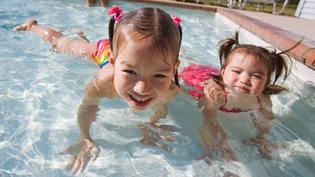
That sparkling blue water looks cool and inviting on a scorching summer day. But do you really know what you’re getting when you dive in the pool?

Let’s try pee and poop for starters. And if you think chlorine totally protects you from that and other yucky stuff, think again.

“People believe that the water is sterile because it’s a pool with chlorine in it, but the reality is as soon as you stick a human body in water, it’s no longer sterile. There are bacteria and germs that can get in the water,” says Thomas Lachocki, PhD, CEO of the National Swimming Pool Foundation.

Those bacteria and germs, which come from you and your fellow swimmers, can make it harder for chlorine to do its job.

One major culprit: urine. The true reason swimmers get red, irritated eyes is not the chlorine itself, but from a reaction caused when pee mixes with chlorine, Lachocki says.

When chlorine is battling urine and other wastes, it loses the ability to fully protect us from other lingering pool germs, says Michele Hlavsa, RN, MPH, chief of the CDC’s Healthy Swimming Program.

“The chlorine is busy mixing with what we bring into the water, and there is less chlorine to kill the germs. We are kind of using up the chlorine with what’s washing off of our bodies,” Hlavsa says. Studies show the average person brings into the pool:

  • 0.14 grams of poop
  • One or two soda cans’ worth of sweat
  • One cup of pee
  • And billions of skin microbes

Children can carry as much as 10 grams of poop into the pool. “If 1,000 kids go to a waterpark, then 10,000 grams -- or 22 pounds -- of poop will potentially rinse off of their bodies into the water,” Hlavsa says.

Source: http://www.webmd.com/parenting/news/20150701/yucky-pools

read more
acassaraYuck! What?s Really in Your Swimming Pool?

Smartphones and TVs in the Bedroom: What's the Harm?

on January 26, 2016

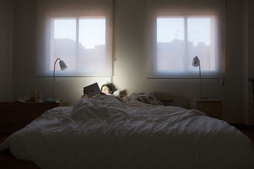
The presence of a television in a child's bedroom can have detrimental effects on sleep quality and duration.

However, relatively few studies have assessed the potential detrimental effects of smaller screens, such as those on handheld devices. In addition to the light from screens and the potential alterations of sleep cues that might be induced by the light, handheld devices or tablets can also alarm with emails or texts, potentially creating even more sleep disruption.

This study assessed seventh- and fourth-grade children in public schools in Massachusetts to correlate nocturnal screen use with perceived sleep sufficiency. The data were collected in 2012 as part of a statewide obesity research effort. There were two primary outcomes of interest. One was the children's weeknight sleep duration.

The second outcome was a measure of whether the children perceived that they had received sufficient sleep during the previous week. Sleep duration was calculated by subtracting the child's usual weeknight bedtime from reported usual weekday awakening times. Sleep adequacy was assessed by asking the students about how many days in the past week they felt that they needed more sleep.

This response was dichotomized into those who indicated that they needed more sleep on 3 or fewer days per week (sufficient sleep) vs those who needed more sleep on 4 or more days per week (insufficient sleep).

The students were asked how often they slept with a device near their bed, and they again responded with the number of days per week. They also indicated whether they had a TV in the room.

Analyses accounted for sex, grade in school, race/ethnicity, and reported physical activity. Complete data were provided by 2000 students (mean age: 10.6 years; 40% Hispanic, 38% non-Hispanic white, 10% non-Hispanic black). Slightly more than half (54%) of the students reported sleeping near small screens, and 75% slept in a room with a television.

When looking at differences by grade, 65% of the seventh graders slept near a small screen compared with 46% of fourth graders. The seventh graders reported a mean sleep time of 8.8 hours compared with 9.8 hours for the fourth graders. Children who slept near a small screen averaged 20.6 fewer minutes of sleep per night (95% confidence interval, 29.9-11.4) compared with those who did not sleep near a small screen. A similar association was seen in children who slept with a television in the room.

The differences in sleep among the groups were mainly accounted for by a delay of bedtime.

When looking at the effects on perceived sufficiency of sleep, the prevalence ratio for sleeping near a small screen was 1.38, indicating that the presence of a small screen was associated with a higher prevalence of reporting insufficient sleep.

Demographic variables did not generally correlate with reports of insufficient sleep. Even among those exposed to small screens, the duration of screen time was associated with a greater prevalence ratio of reporting insufficient sleep. The investigators concluded that sleeping in proximity to a small screen, having a television in the bedroom, and longer duration of screen time were all associated with shorter sleep durations. Presence of a small screen (but not a TV) and longer screen time were associated with perceived insufficiency of sleep.

Source: William T. Basco, Jr, MD, MS, http://www.medscape.com/viewarticle/839529

read more

acassaraSmartphones and TVs in the Bedroom: What's the Harm?

Muscle Cramp Prevention: Quadriceps Muscle Stretch

on January 19, 2016

To avoid future cramps, work toward better overall fitness. Do regular flexibility exercises before and after you work out to stretch muscle groups most prone to cramping.

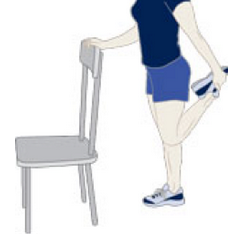
Quadriceps Muscle Stretch

You should feel this stretch in the front of your thigh.

Hold on to a wall or the back of a chair for balance. Lift one foot and bring your heel up toward your buttocks. Grasp your ankle with your hand and pull your heel closer to your body. Hold the stretch for 30 seconds.

Do: Keep your knees close together. Stop bringing your heel closer when you feel the stretch.

Do not: Arch or twist your back.

Hold each stretch briefly, then release. Never stretch to the point of pain.

Source: http://orthoinfo.aaos.org/topic.cfm?topic=A00200

read more
acassaraMuscle Cramp Prevention: Quadriceps Muscle Stretch

Recipe: Roasted Red Snapper

on January 12, 2016

Dinner guests will be impressed with both the bright flavors and the look of this roasted whole fish. Yet it couldn't be simpler to prepare.

  • Number of servings
  • Serves 4

Ingredients

1/4 cup fresh orange juice
1/2 cup fresh lime juice
1/2 teaspoon grated orange zest
1/2 teaspoon grated lime zest
3 shallots or 1/2 red onion, chopped (about 1/4 cup)
2 tablespoons olive oil
1 small whole red snapper, about 1 1/2 pounds, cleaned and scaled, head and tail left on
2 garlic cloves, coarsely chopped
2 tablespoons chopped fresh basil
2 tablespoons chopped fresh mint
1 tablespoon chopped fresh thyme
1/2 teaspoon salt
1/2 teaspoon coarsely ground black pepper
1 small leek, including tender green top, halved lengthwise and cut crosswise into 1 1/2-inch pieces
2 large tomatoes, cut crosswise into slices 1/2-inch thick

Directions

In a shallow glass baking dish, make a marinade by combining the orange and lime juices, orange and lime zests, shallots, and 1 tablespoon of the oil. Score the skin of the fish in a diamond pattern. Add the fish to the marinade and turn once to coat. Cover and refrigerate for 30 minutes, turning the fish occasionally.

Preheat the oven to 425 F. Lightly coat a shallow baking dish with cooking spray.

In a blender or small food processor, combine the garlic, basil, mint, thyme, the remaining 1 tablespoon of oil, 1/4 teaspoon of the salt, and 1/4 teaspoon of the pepper. Pulse to puree. In a small bowl, combine half of the herb paste with the leek. Toss gently to mix.

Sprinkle the leek mixture evenly over the bottom of the prepared baking dish. Top with the tomato slices, arranging them in a single layer. Sprinkle the tomatoes with the remaining 1/4 teaspoon salt and 1/4 teaspoon pepper. Remove the fish from the marinade and pat dry. Discard the marinade. Rub the remaining herb paste over the fish, coating both sides. Place the fish on top of the tomatoes and cover the dish tightly with aluminum foil.

Roast the fish for 30 minutes, then uncover and roast until the fish is opaque throughout when tested with the tip of a knife, 10 to 12 minutes longer. Lift the fish from the baking dish and place on a large platter. Divide the vegetables among 4 warmed individual plates. Peel the skin from the top of the fish, remove the top fillet, and divide it between 2 of the plates. Lift out the center fish bone and discard. Lift the second fillet and divide it between the remaining 2 plates. Serve immediately.

Nutritional analysis per serving

  • Serving size :1/2 fillet
  • Total carbohydrate 12 g
  • Dietary fiber 2 g
  • Sodium 450 mg
  • Saturated fat 2 g
  • Total fat 11 g
  • Cholesterol 63 mg
  • Protein 37 g
  • Monounsaturated fat 6 g
  • Calories 295

Source: http://www.mayoclinic.org/healthy-lifestyle/recipes/roasted-red-snapper/rcp-20049858

read more
acassaraRecipe: Roasted Red Snapper

Osteoporosis Prevention

on January 5, 2016
What we have learned about bone health is especially important as Americans are living longer.  

By 2020, half of all Americans over age 50 will have weak bones, according to the National Institutes of Health (NIH).

We can improve this outcome by making changes to our diet and lifestyle, and preventing bone loss in people who are most at risk.

The good news is, no matter what your age, there are many things you can do to improve your bone health.

Source: http://orthoinfo.aaos.org/topic.cfm?topic=A00315

read more
acassaraOsteoporosis Prevention

Concussion

on December 29, 2015

A concussion is a traumatic brain injury that alters the way your brain functions.
Effects are usually temporary but can include headaches and problems with concentration, memory, balance and coordination.
Although concussions usually are caused by a blow to the head, they can also occur when the head and upper body are violently shaken.
These injuries can cause a loss of consciousness, but most concussions do not. Because of this, some people have concussions and don't realize it.
Concussions are common, particularly if you play a contact sport, such as football. But every concussion injures your brain to some extent. This injury needs time and rest to heal properly.

Most concussive traumatic brain injuries are mild, and people usually recover fully.

read more
acassaraConcussion

Post-traumatic Arthritis

on December 22, 2015
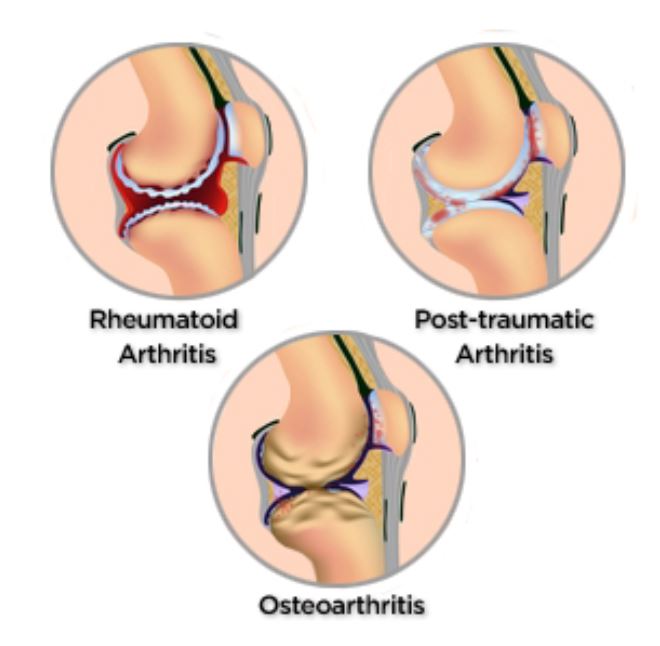
Posttraumatic arthritis is form of arthritis that develops after an injury to the knee.  

For example, a broken bone may damage the joint surface and lead to arthritis years after the injury.

Meniscal tears and ligament injuries can cause instability and additional wear on the knee joint, which over time can result in arthritis.

Source: http://orthoinfo.aaos.org/topic.cfm?topic=A00212

read more
acassaraPost-traumatic Arthritis

Overuse Injuries

on December 15, 2015
Not all injuries are caused by a single, sudden twist, fall, or collision. Overuse injuries occur gradually over time, when an athletic activity is repeated so often, parts of the body do not have enough time to heal between playing.


Overuse injuries can affect muscles, ligaments, tendons, bones, and growth plates. For example, overhand pitching in baseball can be associated with injuries to the elbow. Swimming is often associated with injuries to the shoulder. Gymnastics and cheerleading are two common activities associated with injuries to the wrist and elbow.

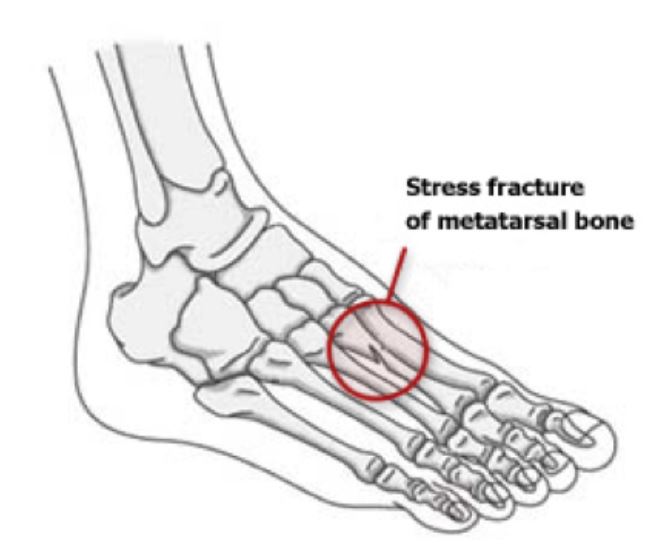
Stress fractures are another common overuse injury in young athletes. Bone is in a constant state of turnover—a process called remodeling. New bone develops and replaces older bone. If an athlete's activity is too great, the breakdown of older bone occurs rapidly, and the body cannot make new bone fast enough to replace it. As a result, the bone is weakened and stress fractures can occur—most often in the shinbone and bones of the feet.

Source: Dr. Thomas M. Mitchell DC, CCSP - Chicago Institute for Health and Wellness

read more
acassaraOveruse Injuries

Osteoporosis Prevention

on December 8, 2015

Although osteoporosis will occur in all persons as they age, the rate of progression and the effects can be modified with proper early diagnosis and treatment.

During growth and young adulthood, adequate calcium nutrition and Vitamin D and regular weight-bearing exercises, such as walking, jogging, and dancing, three to four hours a week, build strong bones and are investments in future bone health.

Smoking and consuming excessive amounts of alcohol should be avoided because they increase bone loss. As people age, appropriate intake of calcium and Vitamin D and regular exercise, as well as avoidance of smoking and excessive alcohol use, are necessary to reduce loss of bone mass.

Source: http://orthoinfo.aaos.org/topic.cfm?topic=A00315

read more
acassaraOsteoporosis Prevention